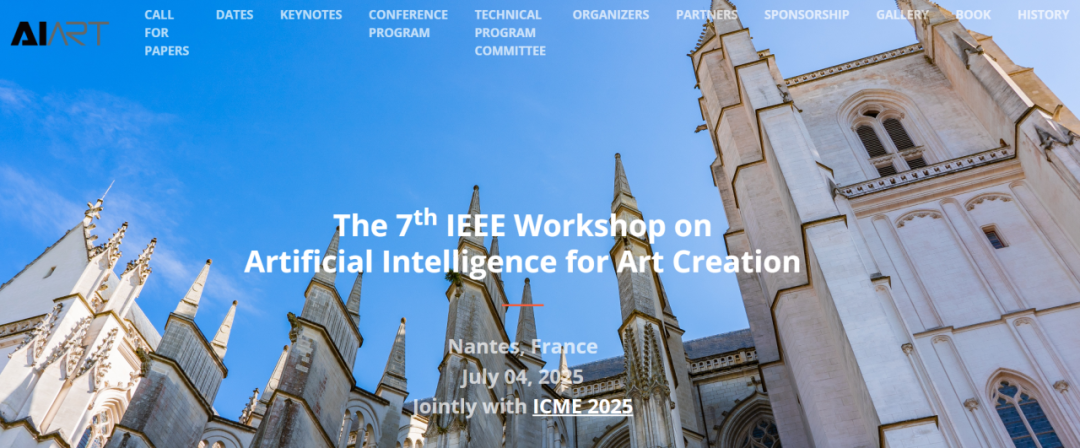

AIART 2025

AIART 2025

CCF多媒体专委会 

2025624日 10:38 北京

AIART 2025


The 7th IEEE Workshop on
Artificial Intelligence for Art Creation

Introduction

Recent advances brought by AI-Generated Content (AIGC) have been an innovative engine for digital content generation, drawing more and more attention from both academia and industry. Across creative fields, AI has sparked new genres and experimentations in painting, music, film, storytelling, fashion and design. Researchers explore the concept of co-creation with AI systems as well as the ethical implications of AI generated images and texts. AI has been applied to art historical research and media studies. The aesthetic value of AI generated content and AI’s impact on art appreciation have also been a contended subject in recent scholarship. AI has not only exhibited creative potential, but also stimulated research from diverse perspectives of neuroscience, cognitive science, psychology, literature, art history, media and communication studies. Despite all these promising features of AI for Art, we still have to face the many challenges such as the biases in AI models, lack of transparency and explainability in algorithms, and copyright issues of training data and AI art works.

This is the 7th AIART workshop to be held in conjunction with ICME 2025 in Nantes, France, and it aims to bring forward cutting-edge technologies and most recent advances in the area of AI art as well as perspectives from neuroscience, cognitive science, psychology, literature, art history, media and communication studies. The theme topic of AIART 2025: AI and Human Co-creativity. 

Keynotes



Keynote 1
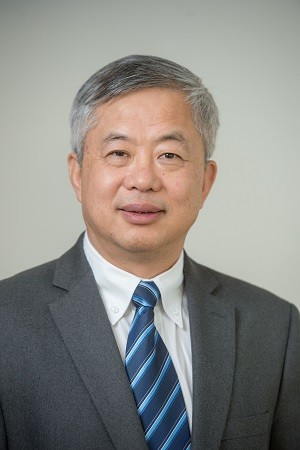


Speaker: Changwen Chen

Title: Aesthetics Reasoning Based on Multimodal LLM


Time:  9:10-9:40, July 4, 2025

Abstract:

The rapid progress of generative art has democratized the creation of visually pleasing imagery. However, achieving genuine artistic impact, a nature that can resonate with viewers on a deeper, more meaningful level, requires a sophisticated aesthetic sensibility. This sensibility involves a multi-faceted reasoning process that extends beyond simple visual appeal, has often been overlooked by current computational models. This talk presents an initial endeavor to capture such a complex process by investigating how the reasoning capability of Multimodal LLMs (MLLMs) can be effectively elicited for aesthetic judgment. Our recent research reveals a critical challenge: MLLMs exhibit a tendency towards hallucinations during aesthetic reasoning, characterized by subjective opinions and unsubstantiated artistic interpretations. We shall demonstrate that these limitations can be overcome by employing an evidence-based, objective reasoning process, as substantiated by the proposed baseline algorithm, ArtCoT. MLLMs prompted by this principle produce multi-faceted and in-depth aesthetic reasoning that aligns significantly better with human judgment. These findings have direct applications in areas such as AI art tutoring and as reward models for generative art. We hope the proposed aesthetics reasoning framework can ultimately pave the way for constructing AI systems that can truly understand, appreciate, and contribute to artistic pieces just like the human aesthetic judgment.

Biography:

Chang Wen Chen is currently Chair Professor of Visual Computing at The Hong Kong Polytechnic University. Before his current position, he served as Dean of the School of Science and Engineering at The Chinese University of Hong Kong, Shenzhen, from 2017 to 2020, and concurrently as Deputy Director at Peng Cheng Laboratory from 2018 to 2021. Previously, he was an Empire Innovation Professor at the State University of New York at Buffalo (SUNY) from 2008 to 2021 and the Allan Henry Endowed Chair Professor at the Florida Institute of Technology from 2003 to 2007. He received his BS degree from the University of Science and Technology of China in 1983, an MS degree from the University of Southern California in 1986, and his PhD degree from the University of Illinois at Urbana-Champaign (UIUC) in 1992.


He has served as Editor-in-Chief for IEEE Trans. Multimedia (2014-2016) and for IEEE Trans. Circuits and Systems for Video Technology (2006-2009). He has received many professional achievement awards, including ten (10) Best Paper Awards or Best Student Paper Awards, the prestigious Alexander von Humboldt Award in 2010, the SUNY Chancellor’s Award for Excellence in Scholarship and Creative Activities in 2016, the UIUC ECE Distinguished Alumni Award in 2019, and the ACM SIGMM Outstanding Technical Achievement Award in 2024. He is an IEEE Fellow, a SPIE Fellow, and a Member of Academia Europaea.


Keynote 2
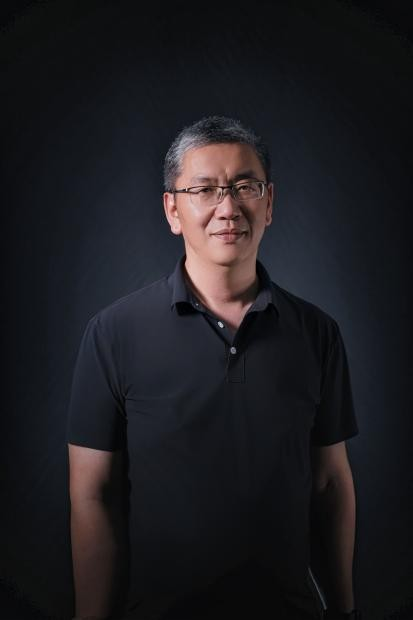


Speaker: Xinyuan Cai

Title: After the Dawn: Challenges and Strategies for AI-Driven Creative Education

Time: 10:40-11:10, July 4, 2025

Abstract:

With the rapid advancement of artificial intelligence technologies, creative education now stands at the threshold of a profound transformation. After the Dawn: Challenges and Strategies for AI-Driven Creative Education explores the deep impacts of AI on art and design education, while uncovering the underlying challenges and potential pathways for reform. This is not merely a response to technological intervention in teaching, but a redefinition of the very concept of “creativity.”


This talk unfolds across three dimensions. First, it reviews the practical applications of AI in artistic creation, design tools, and educational platforms in the current era, revealing its advantages in improving efficiency and expanding the boundaries of creative thinking. Taking large language models such as DeepSeek and ARTI Designer as examples, we observe how these tools are capable of generating stylistically distinct and logically coherent textual and visual outputs, becoming “new collaborators” in the creative process. Second, the lecture delves into the structural issues AI brings to creative education—such as the weakening of students’ originality, increased technological dependency, shifts in the role of educators, and imbalances in assessment systems. Meanwhile, we must also confront the cognitive biases and semantic inaccuracies exhibited by models like DeepSeek in educational contexts, underscoring the urgent need for ethical frameworks and critical literacy. Finally, the lecture proposes a set of systematic strategies and recommendations—ranging from curriculum redesign, AI ethics education, interdisciplinary collaboration mechanisms, to re-training programs for educators—to help higher education institutions build a more open, flexible, and sustainable AI-driven creative education system.

After the Dawn” symbolizes not only the illumination brought by technology, but also the clarity and choices faced by educators and learners in the age of intelligence. This talk aims to inspire deep reflection on the future direction of creative education and to promote the formation of an innovative educational paradigm that embraces technology while upholding humanistic values.  


Biography:

Dr. Cai Xinyuan, Ph.D. Supervisor, Professor, Nationally Distinguished Expert. He is the Dean of the Design School at Huazhong University of Science and Technology, the Director of the Key Laboratory of Lighting Interactive Service and Technology, Ministry  of Culture and Tourism, the Director of the Hubei Provincial Engineering Research Centre of Digital Light and Shadow Technology, the Chairman of ARTI Collaborative Platform of AI Art Education CHINA, and a member of the Teaching Steering Committee of Animation and Digital Media Major of the Ministry of Education.


Dr. Cai has long been engaged in teaching and research in the fields of digital media art theory and education, digital light and shadow art environment and landscape, artificial intelligence art and design. He has presided over more than 20 national key projects. He has successively completed many national, provincial and municipal major cultural and technological integration projects, such as the 70th anniversary of the National Day ‘Shining Hubei’ colourful car, Wuhan Yangtze River light show, and so on. He led the construction of ‘ARTI designer XL’ ARTI Art Design Supercomputing Platform to promote the development of artificial intelligence art education. His research and practice have promoted the deep integration of art, science and technology and culture, and played an important leading role in the field of design innovation in the era of intelligence.


Keynote 3
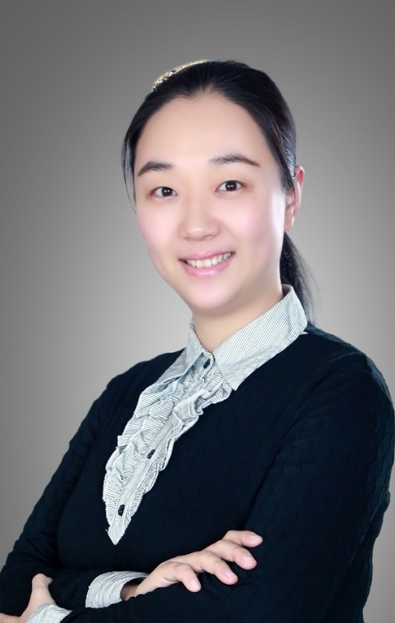


Speaker: Jing Dong

Title: Reflections and Outlook on Generative Artificial Intelligence —— From the Security and Ethics Perspective

Time: 13:30-14:00, July 4, 2025

Abstract:

Generative Artificial Intelligence (Generative AI), powered by Large Language Models (LLMs) and Multimodal Large Language Models (MLLMs), is rapidly reshaping the landscape of artificial intelligence. State-of-the-art models such as GPT-4, DeepSeek, Claude, and DALL-E 3 demonstrate significant progress in generative capabilities, enabling breakthroughs in creative content synthesis, logical inference, automated decision-making, and domain-specific applications. However, the accelerated deployment of these systems has also exposed critical security vulnerabilities and ethical concerns, including the risks of misuse, deepfakes, phishing scams, data privacy breaches, and model security. It has raised unexpected concerns from individuals, organizations, communities and even nations. As Generative AI continues to evolve and integrate into various applications and sectors, the need for robust mechanisms to ensure the safety, trustworthiness, and ethical use of generative models has become increasingly urgent. This talk will focus on security and ethics threats, state-of-the-art solutions and future challenges of the generative AI , especially for visual information. 


Biography:

Dr. Jing Dong is currently a Full Professor/Researcher in the National Laboratory of Pattern Recognition in the Institute of Automation, Chinese Academy of Sciences (CASIA). She is a senior member of IEEE/CCF/CSIG. Her research interests include pattern recognition, image processing and image forensics. She has published more than 100 academic papers and chaired in many major national scientific projects and played a leading role in several national and international technical conferences. She served as the IEEE Biometric Council Beijing Chapter Chair since 2019 and the IEEE R10 ExCom member since 2017. She was also the IEEE SPS Membership Development Director from 2022 to 2024.


She was awarded with the IBM Faculty Award (2016) and the ICPR Best Scientific Paper Award (2018), the CAAI Outstanding Individual Member Award (2019), the CSIG Outstanding Female Young Scientist Award (2020) , the CSIG Science and Technology Award (2021) the Wu Wenjun Artificial Intelligence Science and Technology Award (2021) and the CAI Innovation Award (1st Prize,2022) for her excellent contribution for the technical innovation and leadership for the community.


Keynote 4
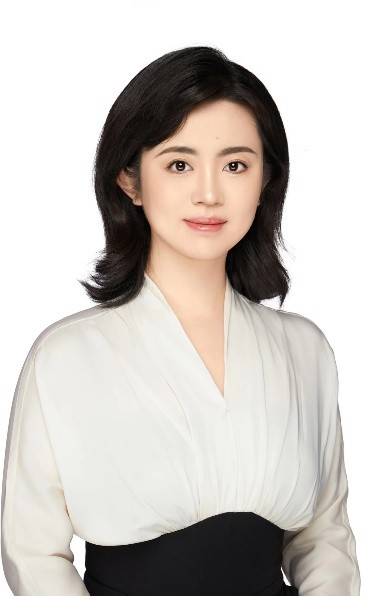


Speaker: Haonan Cheng

Title: Audio Computing in Multimedia Intelligence: Methods, Applications, and Prospects

Time: 14:50-15:20, July 4, 2025

Abstract:

Audio computing technology in multimedia intelligence, as an intersection of artificial intelligence, physical acoustics and art, is undergoing a paradigm shift from traditional signal analysis to deep semantic understanding. In recent years, the boundaries of generative AI combined with audio continue to expand. The audio computing is reshaping the sensory dimensions of human-computer interaction from traditional audio recording to personalized music creation, and from ambient sound simulation to cross-modal content generation, which poses new security risks. This report focuses on the key methods, typical applications, and future trends of audio computing, with an emphasis on its critical role in intelligent creation, immersive experience, and content security.


Biography:

Haonan Cheng, associate researcher of the State Key Laboratory of Media Convergence and Communication, Communication University of China, mainly focuses on audio information processing, audio-visual cross modal generation and forgery detection.


She became the first technical expert in China to be awarded the Asia-Pacific Young Engineer Prize by ABU in 2024, and was selected for the Beijing National Governance and Young Talent Cultivation Program in 2025. In recent years, she has published more than 40 SCI/EI papers in IEEE TOG, TIFS, TASLP, SIGGRAPH, IEEE VR, IJCAI, AAAI, ACM MM, etc. She has been authorized 2 national invention patents, and won the Excellent Paper Award in the 5th CSIG China Media Forensics and Security Conference, and Best Poster Paper Award in the 20th International Forum on Digital Multimedia Communications. She was funded by more than 10 projects, including National Natural Science Foundation of China, National Key R&D Program, National Social Science Foundation of China, and Medium and Long-term Science and Technology Program for Radio, Television and Audiovisual Network, etc. She serves as a member of the Multimedia Specialized Committee of the Chinese Society of Image and Graphics, the Program Chair of the International Forum on Digital Multimedia Communications, the Forum Chair of the China Multimedia Conference, and the Session Chair of ACM MM and other international conferences.


Keynote 5



Speaker: Terence Broad

Title:  Explaining AI through Artistic Practice

Time: 16:10-16:40, July 4, 2025

Abstract:

Generative neural networks produce media through a complex fabric of computation, contingent on large scraped datasets, where features and representations get encoded into the weights of unfathomably large data arrays, which in turn are enmeshed through complex chains of computation. The ease and realism through which this generated media is mass-produced and its almost uncanny flawlessness makes it easy to forget the complex computational contingencies that produce it. This talk will show how through the artistic practice of making targeted interventions to inputs, weights, training and inference of generative neural networks, artists are able to make critical works that reveal to us otherwise unseen aspects of these models, where the artworks themselves present new ways of understanding and making sense of these unfathomably complex computational systems.


Biography:

Terence Broad is an artist and researcher working in London. He is a Senior Lecturer at the UAL Creative Computing Institute and has recently completed a PhD at Goldsmiths in generative AI. His art and research have been presented internationally: at conferences and journals such as SIGGRAPH, Leonardo, NeurIPS, and ICCC; and museums such as The Whitney Museum of American Art, Garage Museum of Contemporary Art, Ars Electronica, The Barbican and The Whitechapel Gallery. In 2019 He won the Grand Prize in the ICCV Computer Vision Art Gallery. His work is in the city of Geneva’s contemporary art collection.


ConferenceProgram

Address: Room 450, Cité Nantes Congress Centre, Nantes, France

Time: 9:00-17:00, July 4, UTC/GMT +2


9:00 –    9:10

Opening    Remark (Dr. Luntian Mou)

9:10 –    9:40

Keynote    1

Host:    Dr. Luntian Mou

Changwen Chen

Title:    Aesthetics Reasoning based on Multimodal LLM


9:40 –    10:20

Session    F1: AI for Multimodal and Cross-modal Art Generation

Host:    Dr. Luntian Mou

01:    Video-driven cross-modal controlled music generation

Jingge    Zhao (ZhengZhou University); Xiaobing Li (Central Conservatory of    Music); Weipeng Wang (Zhengzhou University); Yan Gao,     Xiaoqing Wang  (Central Conservatory of Music); Yun Tie    (Zhengzhou University)

02:    PiCo: Enhancing Text-Image Alignment with Improved Noise Selection    and Precise Mask Control in Diffusion Models

Chang    Xie, Chenyi Zhuang, Pan Gao (Nanjing University of Aeronautics and    Astronautics)

03:    Adaptive Prompt Modifier for Text-to-Image Model

Gang Yang

04:    Text-driven Physically Interpretable Face Editing

Songru    Yang, Yapeng Meng, Zhenwei Shi, Zhengxia Zou (Beihang University)


10:20    – 10:40

Coffee    Break

10:40    – 11:10

Keynote    2

Host:    Dr. Luntian Mou

Xinyuan Cai

Title:    After the Dawn: Challenges and Strategies for AI-Driven Creative    Education


11:10    – 12:00

Session    F2: AI for Cultural Heritage

Host:    Dr. Ambarish Natu

05:    RiverEcho: Real-Time Interactive Digital System for Ancient Yellow    River Culture

Yizong Wang

06:    Liquor Inspiration: AI Art with Chinese Calligraphy Painting and    Drinking Culture

Ronghua    Cai

07:    Exploring Chinese Text Generation and Typography Using Diffusion    Models

Bolin    Wang

08:    Ara-Pic: A Framework for Enhancing Arabic Cultural Representation    in AI-Generated Images

Wala    ELsharif

09:    Empowering Non-Technical Humanities Scholars with AI-Driven Tools:    An Accessible Framework for Poetry Analysis

Tiange    Zhou 


12:00    – 13:30

Lunch

13:30    – 14:00

Keynote    3

Host:    Dr. Ambarish Natu

Jing Dong

Title:    Reflections and Outlook on Generative Artificial Intelligence    ——From the Security and Ethics Perspective


14:00    – 14:50

Session    F3: Affective Computing and AI for Aesthetics

Host:    Dr. Ambarish Natu

10:    RPGCN-GDA: Regionally Progressive Graph Convolutional Network with    Gender-Sensitive Domain Adaptation for EEG Emotion Recognition

Haonan Cheng

11:    Prompt-Guided Aesthetic Assessment with Cross-Modal Semantic    Alignment

Zelu Qi

12:    AI-Assisted Curation: A Framework for Curatorial Materials

Qinyan    Li

13:    Multi-LoRA Composition for Efficiently Learning Fine-Grained Font    Styles

Zixuan    Wang, Mingfu Yan, Zhenping Li (Shenzhen Institutes of Advanced    Technology, Chinese Academy of Sciences); Yuchen Guo (Beijing    Normal-Hong Kong Baptist University); Bin Fu (Shenzhen Institutes    of Advanced Technology, Chinese Academy of Sciences)

14:    ArtisanFlow: Style Customization System for Illustration    Generation 

Zeyu    Liu


14:50    – 15:20

Keynote    4

Host:    Dr. Ambarish Natu

Haonan Cheng

Title:    Audio Computing in Multimedia Intelligence: Methods, Applications,    and Prospects


15:20    – 16:10

Session    F4: AI for Music

Host:    Dr. Luntian Mou

15:    EMelodyGen: Emotion-Conditioned Melody Generation in ABC Notation    with the Musical Feature Template

Monan    Zhou

16: A    Visualization Method and Application of Composition Based on    Dynamic Clock Spiral

Lin Gan

17:    MIRTracks: A Large-Scale Multi-Dimensional Multi-Track Music    Dataset

Yuehan    Lee

18:    FSD 2.0: Improved Fake Song Dataset for Unknown-domain Deepfake    Detection

Haonan    Cheng

19:    Multitrack Music Generation Combining Transformer and Diffusion    Model

Luntian    Mou

16:10    – 16:40

Keynote    5

Host:    Dr. Luntian Mou

Terence Broad

Title:    Explaining AI through Artistic Practice


16:40    – 16:50

Best    Paper Award & Closing Remark (Dr. Luntian Mou)

TPC Members

    Ajay Kapur, California Institute of the Arts, USA

      Alan Chamberlain, University of Nottingham, UK

        Alexander Lerch, Georgia Institute of Technology, USA

          Alexander Pantelyat, Johns Hopkins University, USA

            Bahareh Nakisa, Deakin University, Australia

              Baoqiang Han, China Conservatory of Music, China

                Baoyang Chen, Central Academy of Fine Arts, China

                  Bing Li, King Abdullah University of Science and echnology, Saudi Arabia

                    Björn W. Schuller, Imperial College London, UK

                      Bob Sturm, KTH Royal Institute of Technology, Sweden

                        Borou Yu, Harvard University, USA

                          Brian C. Lovell, The University of Queensland, Australia

                            Carlos Castellanos, Rochester Institute of Technology, USA

                              Changsheng Xu, Institute of Automation, Chinese Academy of Sciences, China

                                Chunning Guo, Renmin University, China

                                  Cong Jin, Communication University of China, China

                                    Dong Liu, University of Science and Technology of China, China

                                      Dongmei Jiang, Northwestern Polytechnical University, China

                                        Emma Young, BBC, UK

                                          Gus Xia, New York University Shanghai, China & Mohamed bin Zayed University of Artificial Intelligence, United Arab Emirates

                                            Haifeng Li, Harbin Institute of Technology, China

                                              Haipeng Mi, Tsinghua University, China

                                                Han Zhang, University of Chinese Academy of Sciences, China

                                                  Hanli Wang, Tongji University, China

                                                    Haonan Chen, Communication University of China, China

                                                      Honghai Liu, Harbin Institute of Technology, China

                                                        Hongxun Yao, Harbin Institute of Technology, China

                                                          Jesse Engel, Google, USA

                                                            Jiafeng Liu, Central Conservatory of Music, China

                                                              Jia Jia, Tsinghua University, China

                                                                Jiajian Min, Harvard University, USA

                                                                  Jian Zhang, Peking University, China

                                                                    Jian Zhao, China Telecom, China

                                                                      Jianyu Fan, Microsoft, Canada

                                                                        Jing Huo, Nanjing University, China

                                                                          Jing Wang, Beijing Institute of Technology, China

                                                                            Jingjing Chen, Fudan University, China

                                                                              Jingting Li, Institute of Psychology of the Chinese Academy of Sciences, China

                                                                                Jingyuan Yang, Shenzhen University, China

                                                                                  Jinshan Pan, Nanjing University of Science and Technology, China

                                                                                    Joanna Zylinska, King’s College London, UK

                                                                                      John See, Multimedia University, Malaysia

                                                                                        Juan Huang, Johns Hopkins University, USA

                                                                                          Jufeng Yang, Nankai University, China

                                                                                            Junping Zhang, Fudan University, China

                                                                                              Kang Zhang, Hong Kong University of Science and Technology (Guangzhou), China

                                                                                                Kate Crawford, University of Southern California, USA

                                                                                                  Ke Lv, University of Chinese Academy of Sciences, China

                                                                                                    Kenneth Fields, Central Conservatory of Music, China

                                                                                                      Lai-Kuan Wong, Multimedia University, Malaysia

                                                                                                        Lamberto Coccioli, Royal Birmingham Conservatoire, UK

                                                                                                          Lamtharn Hanoi Hantrakul, ByteDance, USA

                                                                                                            Lei Xie, Northwestern Polytechnical University, China

                                                                                                              Leida Li, Xidian University, China

                                                                                                                Li Liu, Hong Kong University of Science and Technology (Guangzhou), China

                                                                                                                  Li Song, Shanghai Jiao Tong University, China

                                                                                                                    Li Zhou, China University of Geosciences (Wuhan), China

                                                                                                                      Lianli Gao, University of Electronic Science and Technology of China, China

                                                                                                                        Lin Gan, Tianjin University, China

                                                                                                                          Long Ye, Communication University of China, China

                                                                                                                            Maosong Sun, Tsinghua University, China

                                                                                                                              Mei Han, Ping An Technology Art institute, USA

                                                                                                                                Mengjie Qi, China Conservatory of Music, China

                                                                                                                                  Mengshi Qi, Beijing University of Posts and Telecommunications, China

                                                                                                                                    Mengyao Zhu, Huawei Technologies Co., Ltd, China

                                                                                                                                      Ming Zhang, Nanjing Art College, China

                                                                                                                                        Mohammad Naim Rastgoo, Queensland University of Technology, Australia

                                                                                                                                          Na Qi, Beijing University of Technology, China

                                                                                                                                            Nancy Katherine Hayles, University of California Los Angeles, USA

                                                                                                                                              Nick Bryan-Kinns, Queen Mary University of London, UK

                                                                                                                                                Nina Kraus, Northwestern University, USA

                                                                                                                                                  Pengtao Xie, University of California, San Diego, USA

                                                                                                                                                    Pengyun Li, Wuhan Conservatory of Music, China

                                                                                                                                                      Philippe Pasquier, Simon Fraser University, Canada

                                                                                                                                                        Qi Mao, Communication University of China, China

                                                                                                                                                          Qin Jin, Renmin University, China

                                                                                                                                                            Qiuqiang Kong, The Chinese University of Hong Kong, China

                                                                                                                                                              Rebecca Fiebrink, University of the Arts London, UK

                                                                                                                                                                Rick Taube, University of Illinois at Urbana-Champaign, USA

                                                                                                                                                                  Roger Dannenberg, Carnegie Mellon University, USA

                                                                                                                                                                    Rongfeng Li, Beijing University of Posts and Telecommunications, China

                                                                                                                                                                      Rui Wang, Institute of Information Engineering, Chinese Academy of Sciences, China

                                                                                                                                                                        Ruihua Song, Renmin University, China

                                                                                                                                                                          Sarah Wolozin, Massachusetts Institute of Technology, USA

                                                                                                                                                                            Shangfei Wang, University of Science and Technology of China, China

                                                                                                                                                                              Shasha Mao, Xidian University, China

                                                                                                                                                                                Shen Li, Henan University, China

                                                                                                                                                                                  Shiguang Shan, Institute of Computing Technology, Chinese Academy of Sciences, China

                                                                                                                                                                                    Shiqi Wang, City University of Hong Kong, China

                                                                                                                                                                                      Shiqing Zhang, Taizhou University, China

                                                                                                                                                                                        Shuai Yang, Peking University, China

                                                                                                                                                                                          Shun Kuremoto, Uchida Yoko Co.,Ltd, Japan

                                                                                                                                                                                            Si Liu, Beihang University, China

                                                                                                                                                                                              Sicheng Zhao, Tsinghua University, China

                                                                                                                                                                                                Simon Colton, Queen Mary University of London, UK

                                                                                                                                                                                                  Simon Lui, Huawei Technologies Co., Ltd, China

                                                                                                                                                                                                    Siwei Ma, Peking University, China

                                                                                                                                                                                                      Steve DiPaola, Simon Fraser University, Canada

                                                                                                                                                                                                        Tiange Zhou, NetEase Cloud Music, China

                                                                                                                                                                                                          Wei Chen, Zhejiang University, China

                                                                                                                                                                                                            Weibei Dou, Tsinghua University, China

                                                                                                                                                                                                              Weiming Dong, Institute of Automation, Chinese Academy of Sciences, China

                                                                                                                                                                                                                Wei-Ta Chu, Chung Cheng University, Taiwan, China

                                                                                                                                                                                                                  Wei Li, Fudan University, China

                                                                                                                                                                                                                    Weiwei Zhang, Dalian Maritime University, China

                                                                                                                                                                                                                      Wei Zhong, Communication University of China, China

                                                                                                                                                                                                                        Wen-Huang Cheng, Chiao Tung University, Taiwan, China

                                                                                                                                                                                                                          Wenli Zhang, Beijing University of Technology, China

                                                                                                                                                                                                                            Wenming Zheng, Southeast University, China

                                                                                                                                                                                                                              Xi Shao, Nanjing University of Posts and Telecommunications, China

                                                                                                                                                                                                                                Xi Yang, Beijing Academy of Artificial Intelligence, China

                                                                                                                                                                                                                                  Xiaohong Liu, Shanghai Jiao Tong University, China

                                                                                                                                                                                                                                    Xiaohua Sun, Tongji University, China

                                                                                                                                                                                                                                      Xiaolin Hu, Tsinghua University, China

                                                                                                                                                                                                                                        Xiaojing Liang, NetEase Cloud Music, China

                                                                                                                                                                                                                                          Xiaopeng Hong, Harbin Institute of Technology, China

                                                                                                                                                                                                                                            Xiaoyan Sun, University of Science and Technology of China, China

                                                                                                                                                                                                                                              Xiaoying Zhang, China Rehabilitation Research Center, China

                                                                                                                                                                                                                                                Xihong Wu, Peking University, China

                                                                                                                                                                                                                                                  Xin Jin, Beijing Electronic Science and Technology Institute, China

                                                                                                                                                                                                                                                    Xinfeng Zhang, University of Chinese Academy of Sciences, China

                                                                                                                                                                                                                                                      Xinyuan Cai, Huazhong University of Science and Technology, China

                                                                                                                                                                                                                                                        Xu Tan, Microsoft Research Asia, China

                                                                                                                                                                                                                                                          Ya Li, Beijing University of Posts and Telecommunications, China

                                                                                                                                                                                                                                                            Yan Yan, Xiamen University, China

                                                                                                                                                                                                                                                              Yanchao Bi, Beijing Normal University, China

                                                                                                                                                                                                                                                                Yi Jin, Beijing Jiaotong University, China

                                                                                                                                                                                                                                                                  Yi Qin, Shanghai Conservatory of Music, China

                                                                                                                                                                                                                                                                    Ying-Qing Xu, Tsinghua University, China

                                                                                                                                                                                                                                                                      Yirui Wu, Hohai University, China

                                                                                                                                                                                                                                                                        Yuan Yao, Beijing Jiaotong University, China

                                                                                                                                                                                                                                                                          Yuanchun Xu, Xiaoice, China

                                                                                                                                                                                                                                                                            Yuanyuan Liu, China University of Geosciences (Wuhan), China

                                                                                                                                                                                                                                                                              Yuanyuan Pu, Yunnan University, China

                                                                                                                                                                                                                                                                                Yun Wang, Beihang University, China

                                                                                                                                                                                                                                                                                  Zhaoxin Yu, Shangdong University of Arts, China

                                                                                                                                                                                                                                                                                    Zheng Lian, Institute of Automation of the Chinese Academy of Sciences, China

                                                                                                                                                                                                                                                                                      Zhi Jin, Sun Yat-Sen University, China

                                                                                                                                                                                                                                                                                        Zhiyao Duan, University of Rochester, USA

                                                                                                                                                                                                                                                                                          Zichun Guo, Beijing University of Chemical Technology, China

                                                                                                                                                                                                                                                                                            Zijin Li, Central Conservatory of Music, China

                                                                                                                                                                                                                                                                                              Organizers
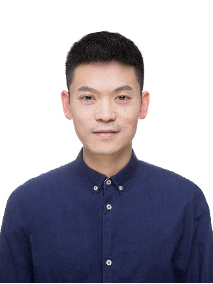


                                                                                                                                                                                                                                                                                              Luntian Mou

                                                                                                                                                                                                                                                                                              Beijing University of Technology, Beijing, China

                                                                                                                                                                                                                                                                                              ltmou@bjut.edu.cn


                                                                                                                                                                                                                                                                                              Dr. Luntian Mou is an Associate Professor with the School of Information Science and Technology, Beijing University of Technology, and also with Beijing Institute of Artificial Intelligence (BIAI). He received the Ph.D. degree in computer science from the University of Chinese Academy of Sciences, China in 2012. He served as a Postdoctoral Fellow at Peking University, from 2012 to 2014. And he was a Visiting Scholar with the University of California, Irvine, from 2019 to 2020. He initiated the IEEE Workshop on Artificial Intelligence for Art Creation (AIART) in 2019, and published a book titled Artificial Intelligence for Art Creation and Understanding in 2024. His current research interests include artificial intelligence, machine learning, multimedia computing, affective computing, and brain-like computing. He is the recipient of Beijing Municipal Science and Technology Advancement Award, and the recipient of China Highway Society Technology Invention Award, IEEE Outstanding Contribution to Standardization Award, and AVS Outstanding Contribution on 15th Anniversary Award. He serves as a Guest Editor for Machine Intelligence Research, and a Reviewer for many important international journals and conferences such as TIP, TAFFC, TMM, TCSVT, TITS, CVPR, AAAI, etc. And he serves as a Co-Chair of System subgroup in AVS workgroup. He is a Senior Member of IEEE, CCF, and CSIG, and a Member of ACM, and CAAI, and an Expert of MPEG China.
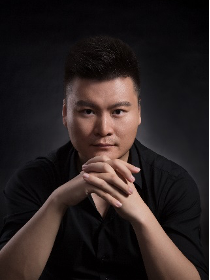


                                                                                                                                                                                                                                                                                              Feng Gao

                                                                                                                                                                                                                                                                                              Peking University, Beijing, China

                                                                                                                                                                                                                                                                                              gaof@pku.edu.cn


                                                                                                                                                                                                                                                                                              Dr. Feng Gao is an Assistant Professor with the School of Arts, Peking University. He has long researched in the disciplinary fields of AI and art, especially in AI painting. He co-initiated the international workshop of AIART. Currently, he is also enthusiastic in virtual human. He has demonstrated his AI painting system, called Daozi, in several workshops and drawn much attention.
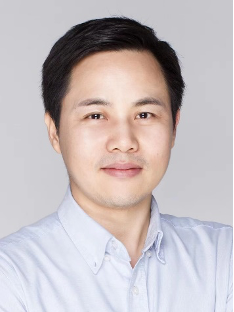


                                                                                                                                                                                                                                                                                              Kejun Zhang

                                                                                                                                                                                                                                                                                              Zhejiang University, Hangzhou, China

                                                                                                                                                                                                                                                                                              zhangkejun@zju.edu.cn


                                                                                                                                                                                                                                                                                              Dr. Kejun Zhang is a Professor with Zhejiang University, joint PhD supervisor on Design and Computer Science, Dean of Department of Industrial Design at College of Computer Science of Zhejiang University. He received his PhD degree from College of Computer Science and Technology, Zhejiang University in 2010. From 2008 to 2009, He was a visiting research scholar of University of Illinois at Urbana-Champaign, USA. In June 2013, he became a faculty of the College of Computer Science and Technology at Zhejiang University. His current research interests include Affective ComputingDesign Science, Artificial Intelligence, Multimedia Computing and the understanding, modelling and innovation design of products and social management by computational means. He is now the PI of National Science Foundation of China, Co-PI of National Key Research and Development Program of China, and PIs of ten more other research programs. He has authored 4 books, more than 40 scientific papers.
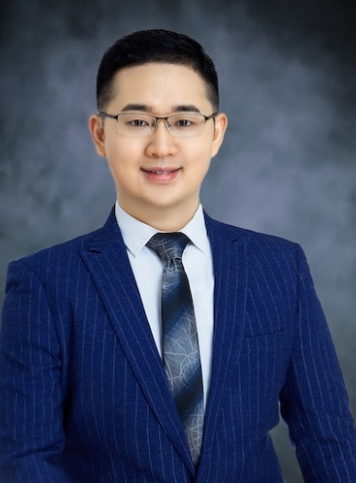


                                                                                                                                                                                                                                                                                              Zeyu Wang

                                                                                                                                                                                                                                                                                              Hong Kong University of Science and Technology (Guangzhou)

                                                                                                                                                                                                                                                                                              Guangzhou, China

                                                                                                                                                                                                                                                                                              zeyuwang@ust.hk


                                                                                                                                                                                                                                                                                              Dr. Zeyu Wang is an Assistant Professor of Computational Media and Arts (CMA) in the Information Hub at the Hong Kong University of Science and Technology (Guangzhou) and an Affiliate Assistant Professor in the Department of Computer Science and Engineering at the Hong Kong University of Science and Technology. He received a PhD from the Department of Computer Science at Yale University and a BS from the School of Artificial Intelligence at Peking University. He leads the Creative Intelligence and Synergy (CIS) Lab at HKUST(GZ) to study the intersection of Computer Graphics, Human-Computer Interaction, and Artificial Intelligence, with a focus on algorithms and systems for digital content creation. His current research topics include sketching, VR/AR/XR, and generative techniques, with applications in art, design, perception, and cultural heritage. His work has been recognized by an Adobe Research Fellowship, a Franke Interdisciplinary Research Fellowship, a Best Paper Award, and a Best Demo Honorable Mention Award.
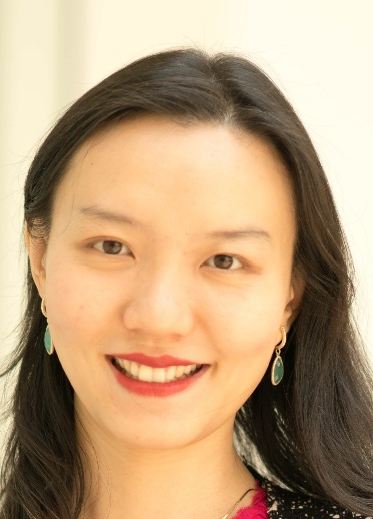


                                                                                                                                                                                                                                                                                              Gerui Wang

                                                                                                                                                                                                                                                                                              Stanford University

                                                                                                                                                                                                                                                                                              California, USA

                                                                                                                                                                                                                                                                                              grwang@stanford.edu


                                                                                                                                                                                                                                                                                              Dr. Gerui Wang is a Lecturer at Stanford University Center for East Asian Studies, where she teaches classes on contemporary art, AI and posthumanism. Her research interests span arts, public policy, environment, and emerging technologies. She is a member of the Alan Turing Institute AI&Arts Research Group. With her background in art history, she has published in the Journal of Chinese History and Newsletter for International China Studies. Gerui's book Sustaining Landscapes: Governance and Ecology in Chinese Visual Culture is forthcoming in 2025. Her research briefs on AI, robotics, media, and society are frequently featured in public venues including Forbes, Alan Turing Institute's AI and Art Forum, Asia Times, and South China Morning Post. Gerui holds a doctorate in art history from the University of Michigan. 
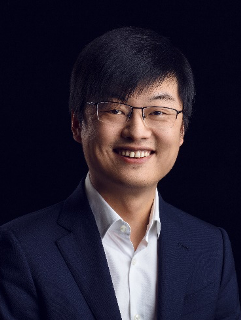


                                                                                                                                                                                                                                                                                              Ling Fan

                                                                                                                                                                                                                                                                                              Tongji University Design Artificial Intelligence Lab, Shanghai, China

                                                                                                                                                                                                                                                                                              lfan@tongji.edu.cn


                                                                                                                                                                                                                                                                                              Dr. Ling Fan is a Scholar and Entrepreneur to bridge machine intelligence with creativity. He is the founding chair and professor of Tongji University Design Artificial Intelligence Lab. Before, he held teaching position at the University of California at Berkeley and China Central Academy of Fine Arts. Dr. Fan co-founded Tezign.com, a leading technology start-up with the mission to build digital infrastructure for creative contents. Tezign is backed by top VCs like Sequoia Capital and Hearst Ventures. Dr. Fan is a World Economic Forum Young Global Leader, an Aspen Institute China Fellow, and Youth Committee member at the Future Forum. He is also a member of IEEE Global Council for Extended Intelligence. Dr. Fan received his doctoral degree from Harvard University and master's degree from Princeton University. He recently published From Universality of Computation to the Universality of Imagination, a book on how machine intelligence would influence human creativity.



                                                                                                                                                                                                                                                                                              Nick Bryan-Kinns

                                                                                                                                                                                                                                                                                              University of the Arts London, London, UK

                                                                                                                                                                                                                                                                                              n.bryankinns@arts.ac.uk


                                                                                                                                                                                                                                                                                              Dr. Nick Bryan-Kinns is a Professor of Creative Computing at the Creative Computing Institute, University of the Arts London. His research explores new approaches to interactive technologies for the Arts and the Creative Industries through Creative Computing. His current focus is on Human-Centered AI and eXplainable AI for the Arts. His research has made audio engineering more accessible and inclusive, championed the design of sustainable and ethical IoT and wearables, and engaged rural and urban communities with physical computing through craft and cultural heritage. Products of his research have been exhibited internationally including Ars Electronica (Austria) the V&A and the Science Museum (UK), made available online and as smartphone apps, used by artists and musicians in performances and art installations, and have been reported in public media outlets including the BBC and New Scientist. He is a Fellow of the Royal Society of Arts, Fellow of the British Computer Society (BCS), and Senior Member of the Association of Computing Machinery (ACM). He is a recipient of the ACM and BCS Recognition of Service Awards, and chaired the ACM Creativity and Cognition conference 2009, and the BCS international HCI conference 2006.
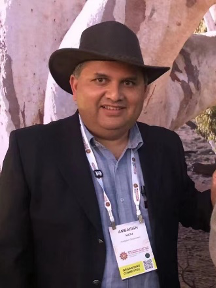


                                                                                                                                                                                                                                                                                              Ambarish Natu

                                                                                                                                                                                                                                                                                              Australian Government, Australian Capital Territory, Australia

                                                                                                                                                                                                                                                                                              ambarish.natu@gmail.com


                                                                                                                                                                                                                                                                                              Dr. Ambarish Natu is with the Australian Government. After graduating from University of New South Wales, Sydney, Ambarish has held positions as a visiting researcher in Italy and Taiwan, China, worked for industry in United Kingdom and the United States of America and for the past ten years has been working in the Australian Government. For the past 17 years, Ambarish has led the development of five international standards under the auspices of the International Standards Organization (ISO) popularly known as JPEG (Joint Photographic Experts Group). He is the recipient of the ISO/IEC certificate for contributions to technology standards. Ambarish is highly active in the area of international standardization and voicing Australian concerns in the area of JPEG and MPEG (Motion Pictures Experts Group) standardization. He previously initiated an effort in the area of standardization relating to Privacy and Security in the Multimedia Context both within JPEG and MPEG standard bodies. In 2015, Ambarish was the recipient of the prestigious Neville Thiele Award and the Canberra Professional Engineer of the Year by Engineers Australia. Ambarish currently works as an ICT Specialist for the Australian Government. Ambarish is a Fellow of the Australian Computer Society and Engineers Australia. Ambarish also serves on the IVMSP TC and the Autonomous Systems Initiative of the IEEE Signal Processing Society. Ambarish has also been General Chair of DICTA 2018, ICME 2023 and TENSYMP 2023 in the past. Ambarish has keen interest in next generation data and analytics technologies that will change the course of the way we interact with in the world.

                                                                                                                                                                                                                                                                                              Partners

                                                                                                                                                                                                                                                                                              Partner1: Association d'intelligence Artificielle France-Chine
                                                                                                                                                                                                                                                                                              L’association d'Intelligence Artificielle France-Chine (AIFC), headquartered in Paris, is a professional organization dedicated to fostering in-depth collaboration between France and China in the field of artificial intelligence. By establishing a multidimensional platform that integrates research, investment, industry, and education, AIFC aims to create a comprehensive ecosystem that bridges academia and industry.

                                                                                                                                                                                                                                                                                              Partner2: Machine Intelligence Research

                                                                                                                                                                                                                                                                                              Machine Intelligence Research (original title: International Journal of Automation and Computing), published by Springer, and sponsored by Institute of Automation, Chinese Academy of Sciences, is formally released in 2022. The journal publishes high-quality papers on original theoretical and experimental research, targets special issues on emerging topics and specific subjects, and strives to bridge the gap between theoretical research and practical applications. The journal has been indexed by ESCI, EI, Scopus, CSCD, etc.

                                                                                                                                                                                                                                                                                              Impact Factor=8.7, JCR Q1

                                                                                                                                                                                                                                                                                                MIR official websites:

                                                                                                                                                                                                                                                                                                  https://www.springer.com/journal/11633

                                                                                                                                                                                                                                                                                                    https://www.mi-research.net

                                                                                                                                                                                                                                                                                                      MIR Editor-in-Chief - Tan Tieniu, Institute of Automation, Chinese Academy of Sciences

                                                                                                                                                                                                                                                                                                        MIR Associate Editors-in-Chief

                                                                                                                                                                                                                                                                                                          Liang Wang, Chinese Academy of Sciences, China

                                                                                                                                                                                                                                                                                                            Yike Guo, Imperial College London, UK

                                                                                                                                                                                                                                                                                                              Brian C. Lovell, The University of Queensland, Australia

                                                                                                                                                                                                                                                                                                                Sponsorship

                                                                                                                                                                                                                                                                                                                Douyin (抖音), is a platform that helps users express themselves and record their good life. Douyin is leading the short-video app universe in China with more than 755 million monthly active users (MAU) and continues to grow at a high rate. Douyin covers a wide range of video content, including technology, art, aesthetics, daily life, etc., and is committed to enriching the life of every user.

                                                                                                                                                                                                                                                                                                                Gallery

                                                                                                                                                                                                                                                                                                                ICME AIART GALLERY

                                                                                                                                                                                                                                                                                                                As a highlight of IEEE AIART 2025, ICME AIART Gallery brings together AI-powered artworks from around the world. It’s a global platform for creativity and communication, exploring how AI is shaping the landscape and future of art.
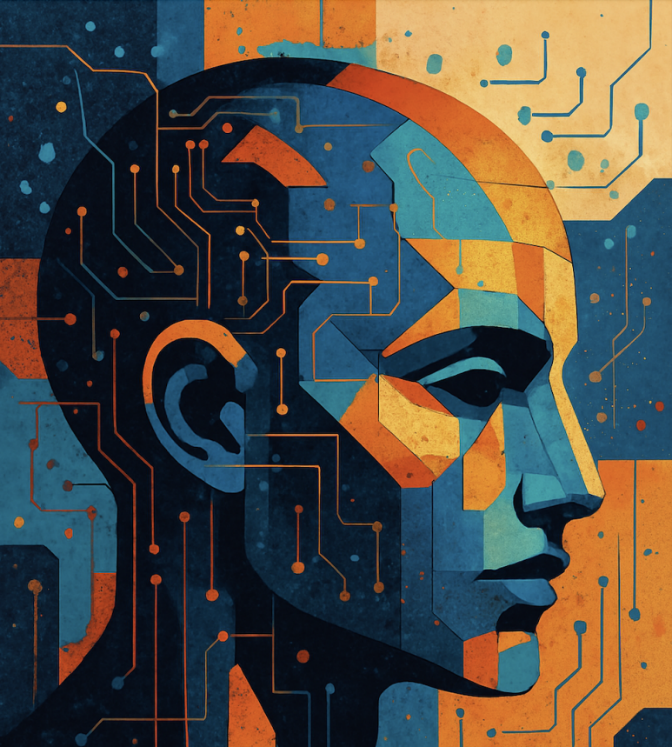


                                                                                                                                                                                                                                                                                                                Intelligence Reimagined: The Convergence of Art and AI

                                                                                                                                                                                                                                                                                                                https://sites.google.com/view/2025aiart-gallery

                                                                                                                                                                                                                                                                                                                July 1–July 4, 2025

                                                                                                                                                                                                                                                                                                                at La Cité Nantes Congress Centre, France


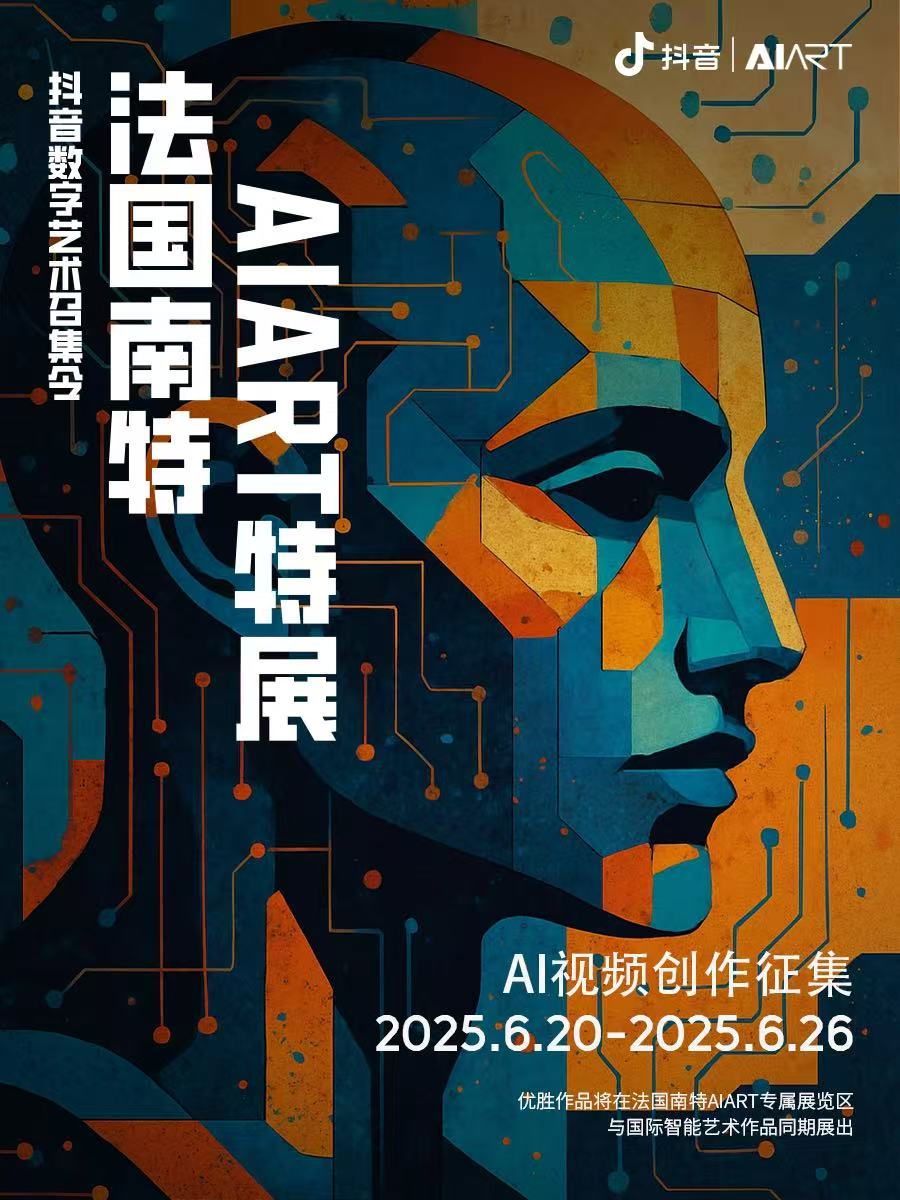
                                                                                                                                                                                                                                                                                                                Douyin Digital Art Calling Order - AIART Special Exhibition

                                                                                                                                                                                                                                                                                                                In order to promote the development of AI art and to present the diversity of AI art in China and around the world, Douyin ART and IEEE AIART Workshop have launched the “Douyin Digital Art Calling Order - AIART Special Exhibition in Nantes, France”.

                                                                                                                                                                                                                                                                                                                From June 20 to June 26, 2025, post your AI artwork on the Douyin platform with the tag #Douyin Digital Art Call #AIART Exhibition in Nantes, France, and you can apply for the program. The IEEE AIART Technical Program Committee will select the best works online. Selected artists will have the opportunity to send their works to the AIART Special Exhibition in Nantes, France.


                                                                                                                                                                                                                                                                                                                Event Video Link:

                                                                                                                                                                                                                                                                                                                https://www.douyin.com/note/7517866188744658226

                                                                                                                                                                                                                                                                                                                Book

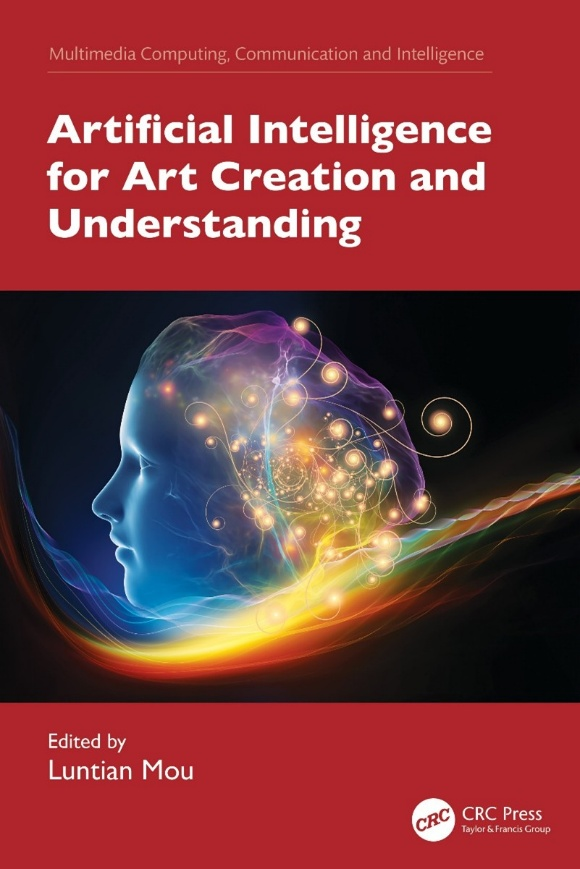
                                                                                                                                                                                                                                                                                                                Artificial Intelligence for Art Creation and Understanding

                                                                                                                                                                                                                                                                                                                Edited By Luntian Mou

                                                                                                                                                                                                                                                                                                                Published: 29 August 2024

                                                                                                                                                                                                                                                                                                                Imprint: CRC Press

                                                                                                                                                                                                                                                                                                                DOI: https://doi.org/10.1201/9781003406273


                                                                                                                                                                                                                                                                                                                ABSTRACT

                                                                                                                                                                                                                                                                                                                AI-Generated Content (AIGC) is a revolutionary engine for digital content generation. In the area of art, AI has achieved remarkable advancements. AI is capable of not only creating paintings or music comparable to human masterpieces, but it also understands and appreciates artwork. For professionals and amateurs, AI is an enabling tool and an opportunity to enjoy a new world of art.


                                                                                                                                                                                                                                                                                                                This book aims to present the state-of-the-art AI technologies for art creation, understanding, and evaluation. The contents include a survey on cross-modal generation of visual and auditory content, explainable AI and music, AI-enabled robotic theater for Chinese folk art, AI for ancient Chinese music restoration and reproduction, AI for brainwave opera, artistic text style transfer, data-driven automatic choreography, Human-AI collaborative sketching, personalized music recommendation and generation based on emotion and memory (MemoMusic), understanding music and emotion from the brain, music question answering, emotional quality evaluation for generated music, and AI for image aesthetic evaluation.


                                                                                                                                                                                                                                                                                                                The key features of the book are as follows:

                                                                                                                                                                                                                                                                                                                  AI for Art is a fascinating cross-disciplinary field for the academic community as well as the public.Each chapter is an independent interesting topic, which provides an entry for corresponding readers.

                                                                                                                                                                                                                                                                                                                    It presents SOTA AI technologies for art creation and understanding.

                                                                                                                                                                                                                                                                                                                      The artistry and appreciation of the book is wide-ranging – for example, the combination of AI with traditional Chinese art.

                                                                                                                                                                                                                                                                                                                        This book is dedicated to the international cross-disciplinary AI Art community: professors, students, researchers, and engineers from AI (machine learning, computer vision, multimedia computing, affective computing, robotics, etc.), art (painting, music, dance, fashion, design, etc.), cognitive science, and psychology. General audiences can also benefit from this book.


                                                                                                                                                                                                                                                                                                                        Purchase Links:

                                                                                                                                                                                                                                                                                                                        https://www.amazon.com/Artificial-Intelligence-Understanding-Multimedia-Communication/dp/1032523603

                                                                                                                                                                                                                                                                                                                        https://www.routledge.com/Artificial-Intelligence-for-Art-Creation-and-Understanding/Mou/p/book/9781032523606

                                                                                                                                                                                                                                                                                                                        https://item.jd.com/10112811679589.html

                                                                                                                                                                                                                                                                                                                        https://product.dangdang.com/11804604409.html